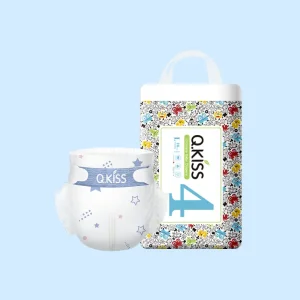
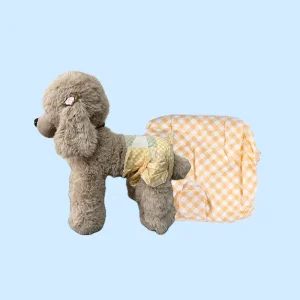
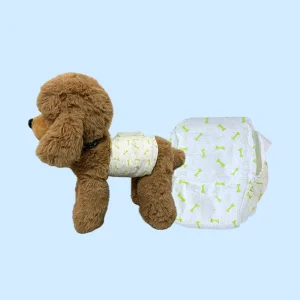
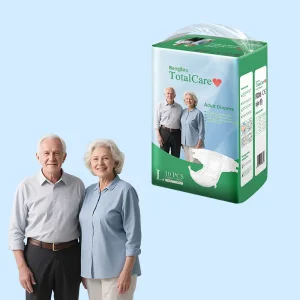
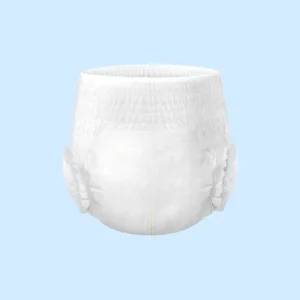
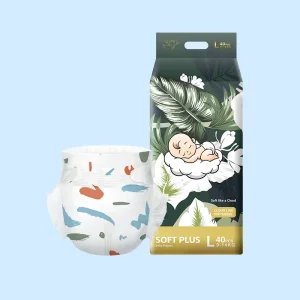
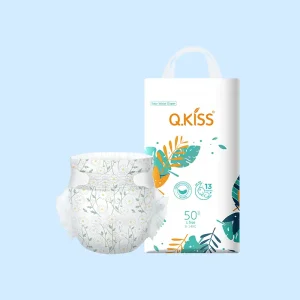
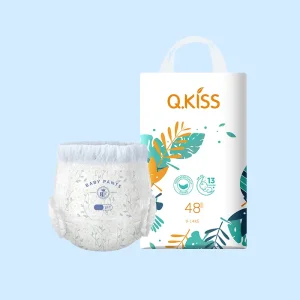
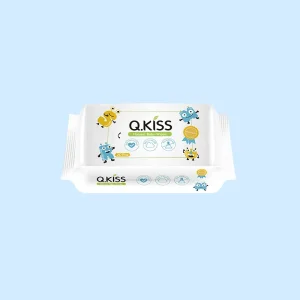
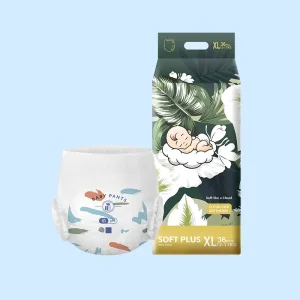
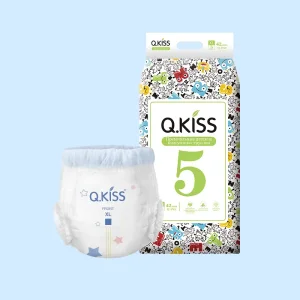
Engineered for performance, eco-compatibility, and safety compliance across baby, adult, and specialty pet application segments.
The global personal care and absorbent hygiene product (AHP) industry is experiencing a seismic shift driven by environmental policy mandates, evolving consumer demographics, and breakthroughs in green polymer chemistry. According to recent market analysis, the global biodegradable diaper market is projected to reach USD $6.8 billion by 2030, registering a CAGR of 9.2%.
Regulatory frameworks such as the European Union’s Single-Use Plastics Directive and federal ESG reporting requirements in North America are forcing distributors, health organizations, and brand owners to audit their supply chains. The search for a reliable Eco Diapers Factory is no longer merely a branding strategy; it is a critical risk mitigation path for modern retail lines.
At the center of this transformation is the challenge of finding the right balance: maintaining maximum fluid containment, excellent wicking speeds, and skin safety, while substituting traditional petroleum-based polymers with renewable alternatives like PLA, bamboo nonwovens, and bio-based superabsorbent polymers (Bio-SAP).
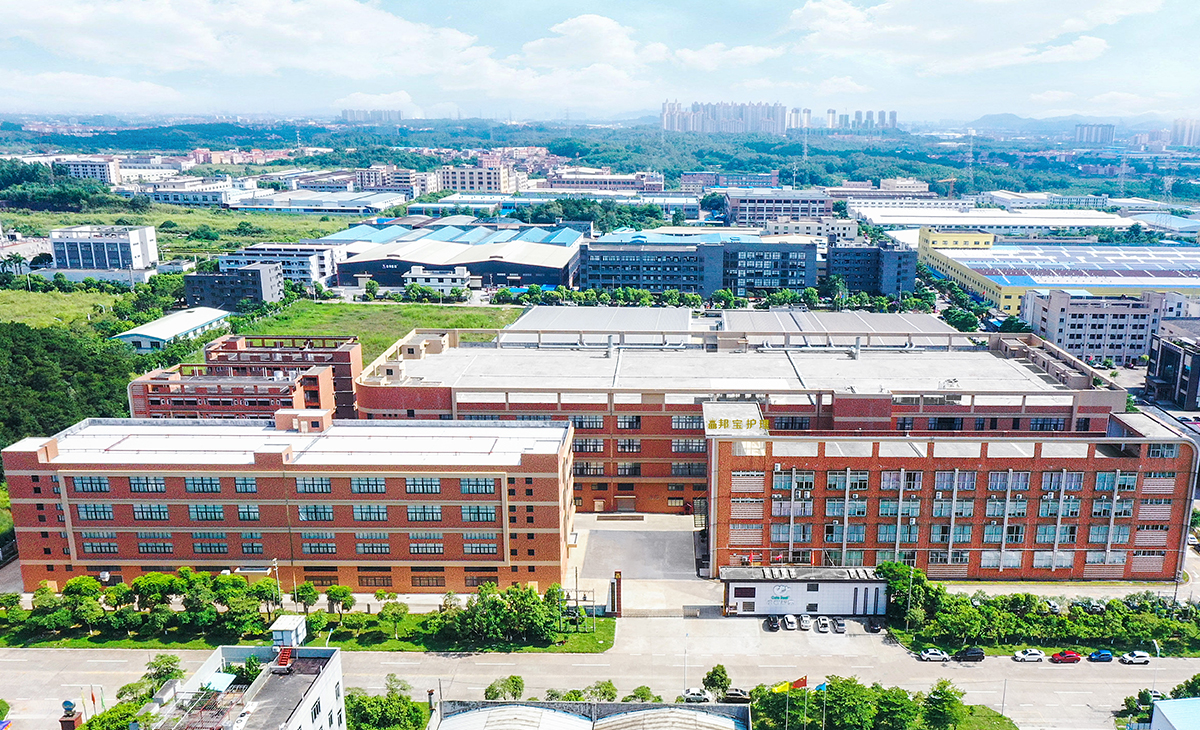

Established since 2010, Guangdong Bangbao personal care products Co., LTD. is a leading enterprise specialized in manufacturing baby diaper, baby pant, wet wipe and a variety of personal care products.
As of today, our total annual turnover is more than USD $35.8 million. We aim to provide personal care products with the best balance between quality and price continuously, to all of our customers around the globe.
By establishing deep supply integration and investing in automatic processing plants, we have built a dependable operation that meets the volume requirements of major retailers while offering flexible ODM/OEM setups for fast-growing direct-to-consumer (DTC) brands.
Bangbao ensures a successful business collaboration with our global business partners, continous to provide personal care products with the best value for money to all of our customers.
Our goal is becoming one of the biggest hygiene groups in Asia Pacific. And to make the world a better place with excellent personal care products from Bangbao.
Through our dedicated environmental programs, we are actively reducing the carbon footprint of our facilities by adopting solar-powered manufacturing, recycling post-industrial waste, and optimizing our logistics to minimize transit emissions.
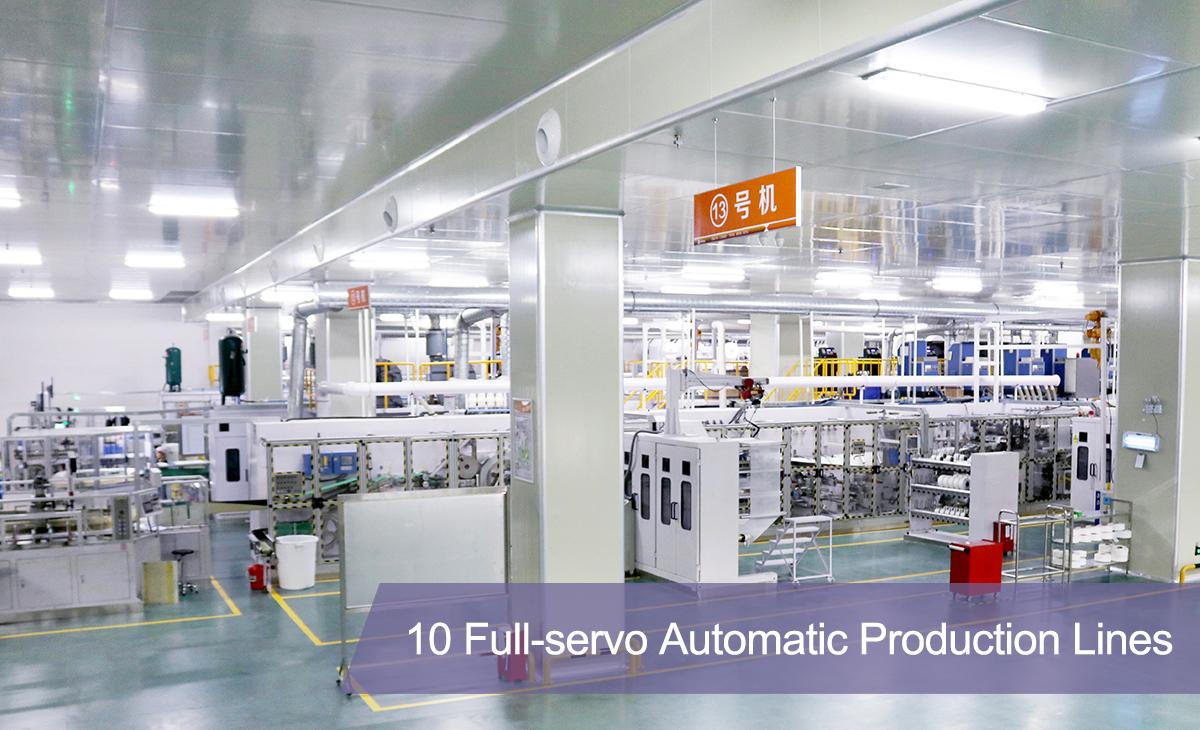
How our smart infrastructure guarantees quality and batch-to-batch consistency for global retail operations.
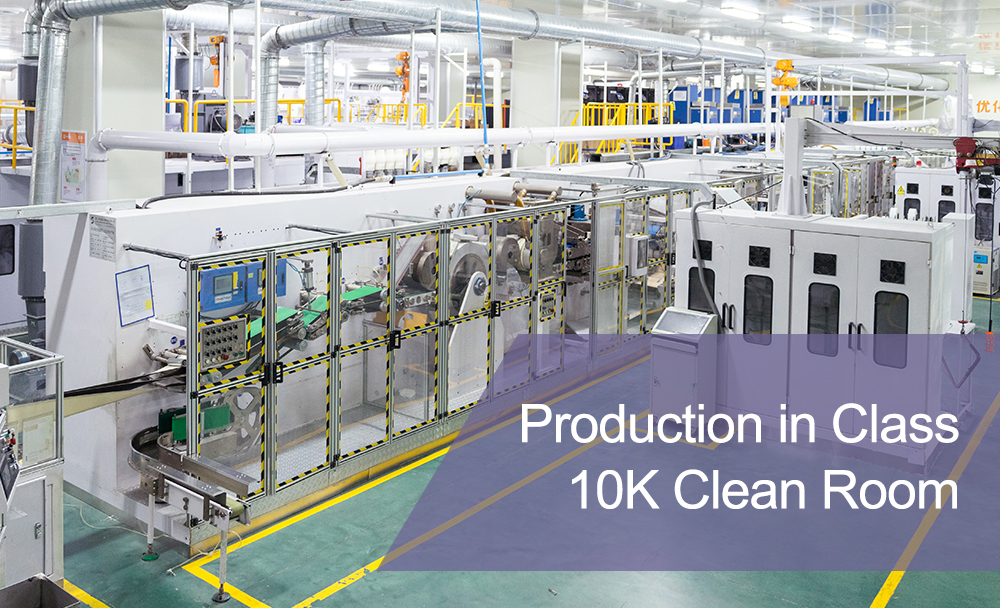
Located in Foshan Guangdong, Bangbao owns a production base of 68,000m² in class 10K clean room classification with central AC support, certified by FDA, CE and ISO.
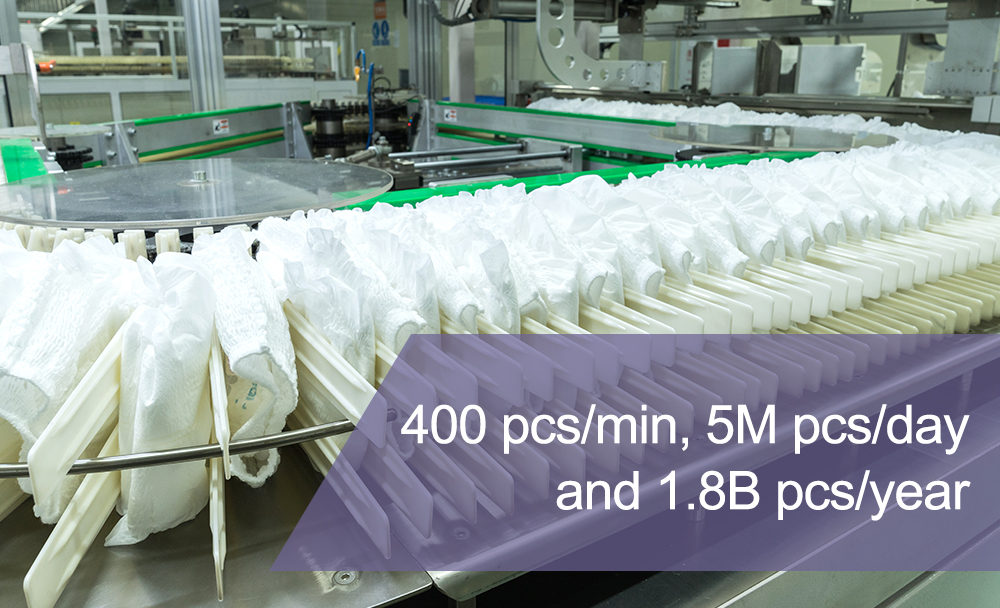
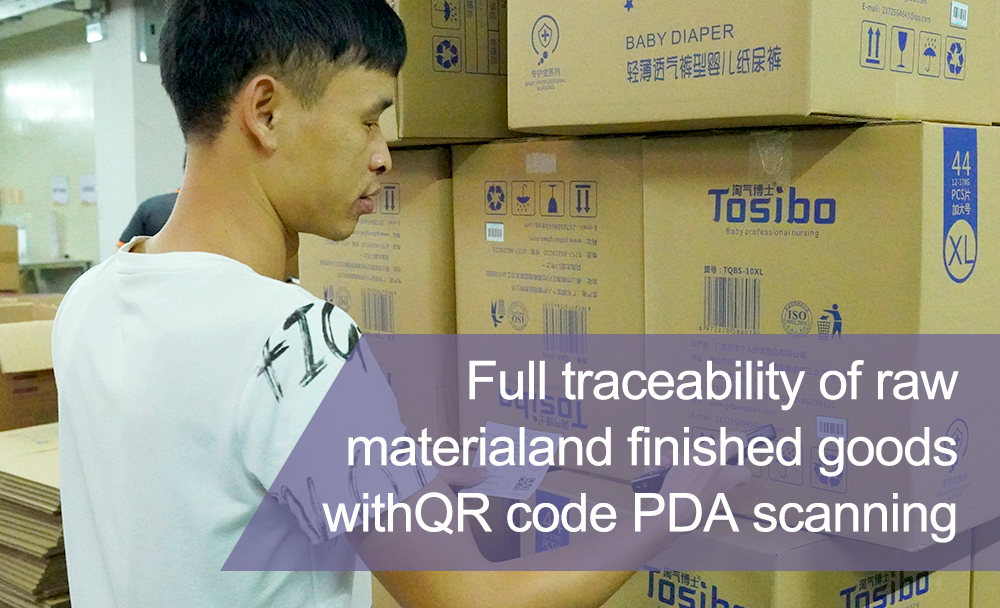
Bangbao equips 10 total automatic high speed baby diaper & pant and pet diaper production lines, with the installation of high speed camera, automatic packing machine and metal detector, which assures each piece of diaper/pant we produced is fully traceable, and makes our annual production capacity over 1.8 billion pieces.
We insists on "Quality makes success. Attitude makes perfection." Bangbao's professional R&D team dedicate in improving and innovating our personal care products in design of structure and material continuously. And our experts in Quality Assurance that every product from Bangbao is manufactured with excellent quality.
High-speed optical camera arrays scan every product on the belt, automatically detecting and sorting out minor structural defects, foreign particles, or alignment issues.
Our Class 10K cleanrooms feature controlled environments that regulate humidity, temperature, and airborne particles, preventing contamination from raw materials to final packaging.
Every finished batch is marked with unique identifiers linked directly to raw material suppliers, plant operators, shift schedules, and quality assurance logs.
Replacing fossil-based polymers with bio-based materials while maintaining top-tier absorbency performance.
A key focus for modern diaper brands is reducing the reliance on traditional plastics. Standard disposable diapers can contain up to 50% polypropylene and polyethylene, which can take centuries to decompose in landfills. The goal for eco-friendly manufacturing is to replace these materials with high-performance, bio-based alternatives.
Our material engineering team focuses on three key areas: compostable topsheets and backsheets, TCF (Totally Chlorine-Free) fluff pulp cores, and bio-derived superabsorbent polymers (SAPs). By using non-GMO cornstarch-based PLA films, we achieve high breathability and reliable liquid barrier performance while significantly reducing carbon emissions.
| Diaper Component | Traditional Fossil Materials | Eco-Friendly Alternatives | Environmental & Practical Advantages |
|---|---|---|---|
| Topsheet (Skin Contact Layer) | Polypropylene (PP) / Polyethylene (PE) nonwoven | 100% Organic Bamboo Fibre / PLA spunbond | Naturally hypoallergenic, smooth feel, biodegradable, reducing risk of diaper rash. |
| Absorbent Core Structure | ECF Fluff Pulp + Synthetic Polyacrylate SAP | TCF Certified Sustainable Wood Pulp + Bio-based SAP | Chlorine-free processing, reduced chemical residues, and improved overall sustainability. |
| Backsheet (Outer Waterproof Layer) | Polyethylene film + PP nonwoven laminate | Breathable PLA (Polylactic Acid) film | Compostable, allows heat and humidity release to keep skin drier. |
| Fasteners & Elastic Ears | Synthesized Polyurethane and Elastomeric polymers | Recyclable polymers / High-stretch bio-elastomers | Reduces carbon footprint while maintaining a secure fit to prevent leaks. |
Different markets have varying preferences, regulatory requirements, and environmental standards. A successful global brand must adjust its product configurations to fit these localized needs:

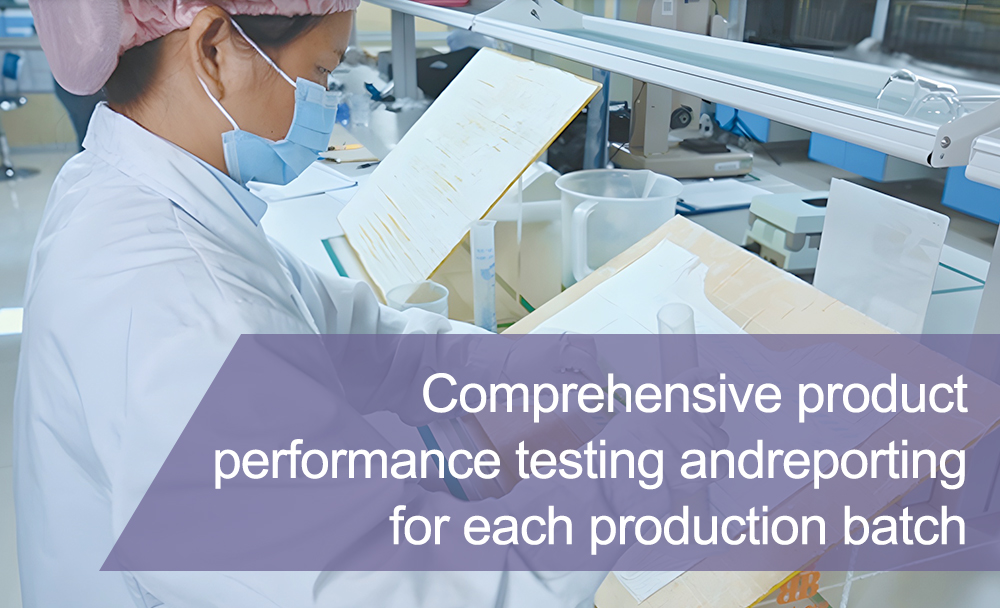
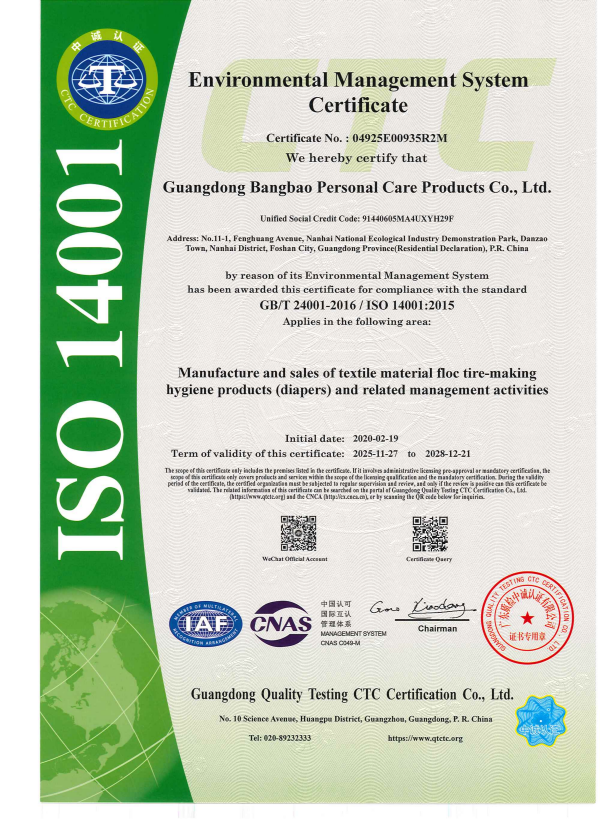
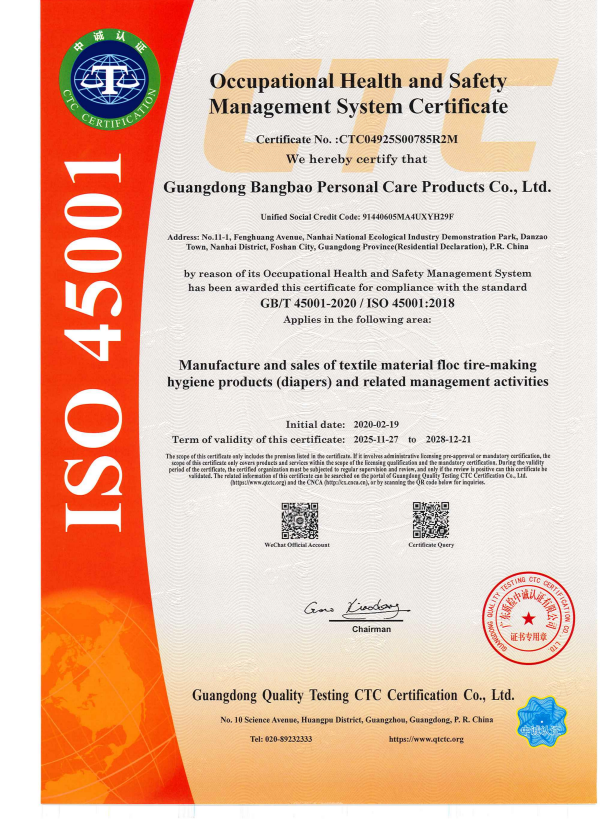
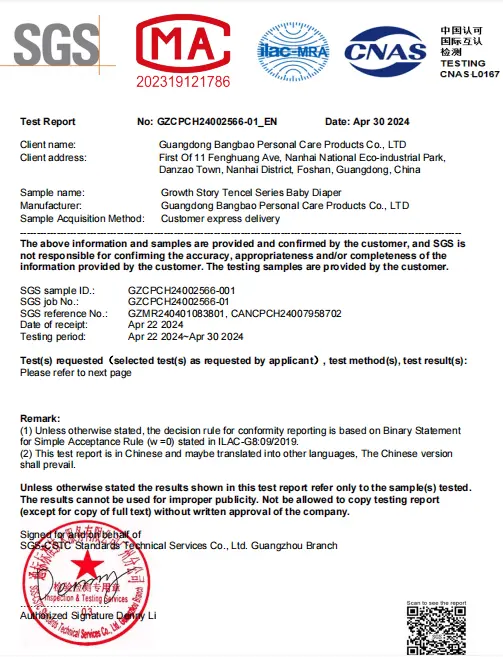
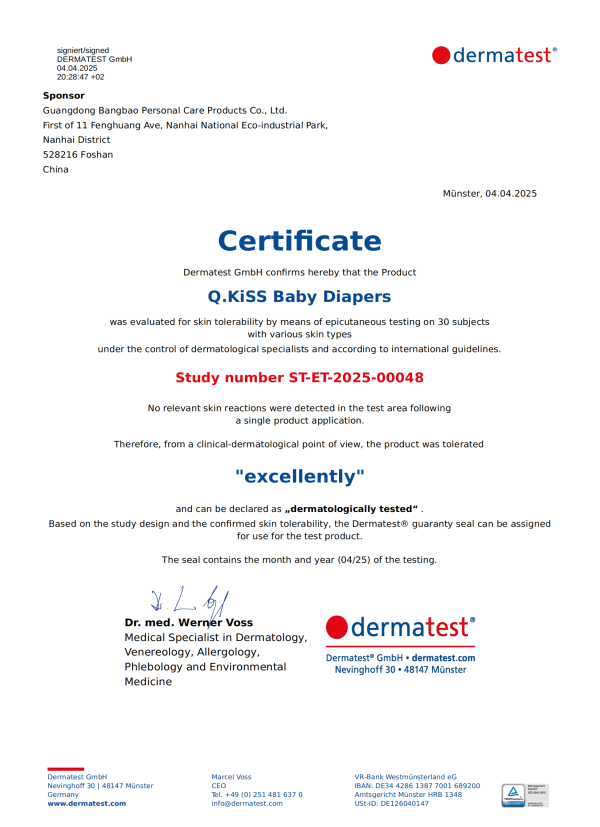
Our commitment to safety, sustainability, and global trade standards is backed by recognized third-party audits.
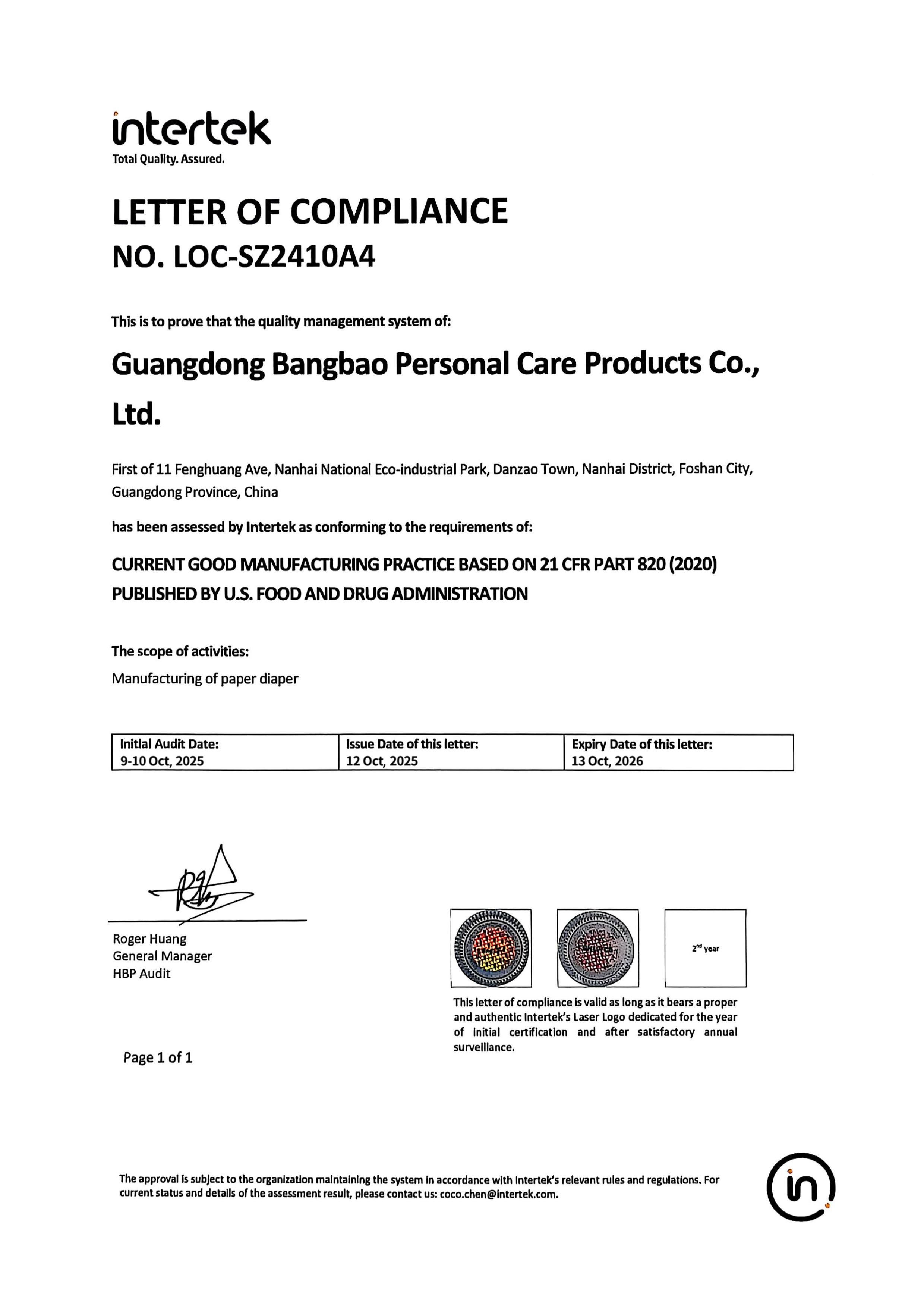
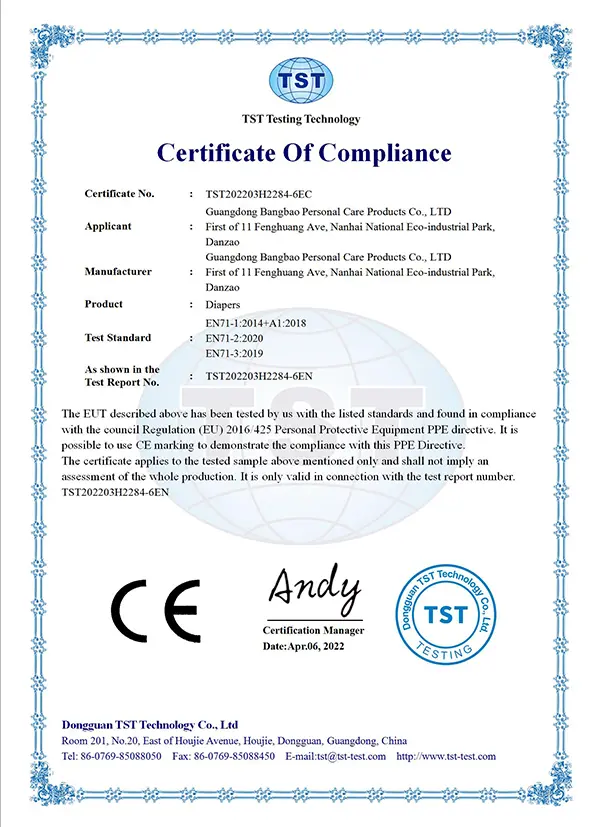
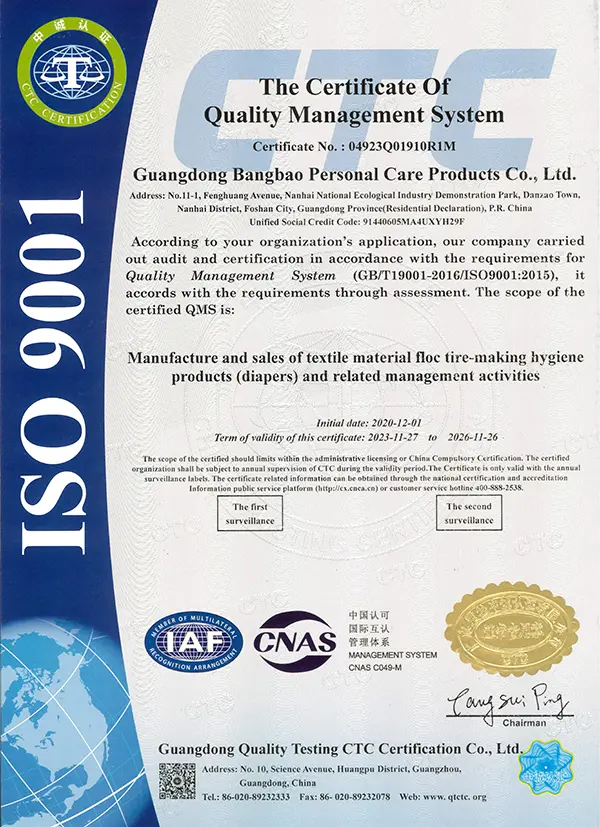
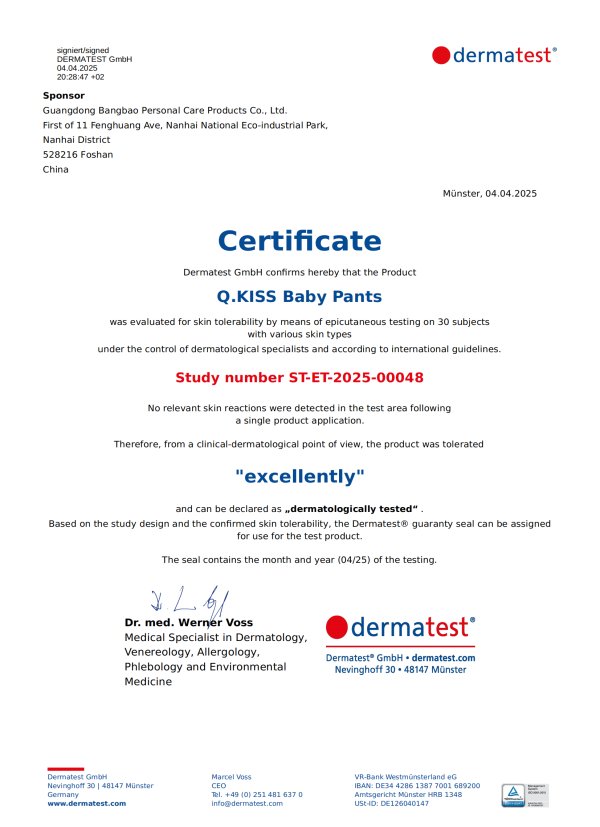
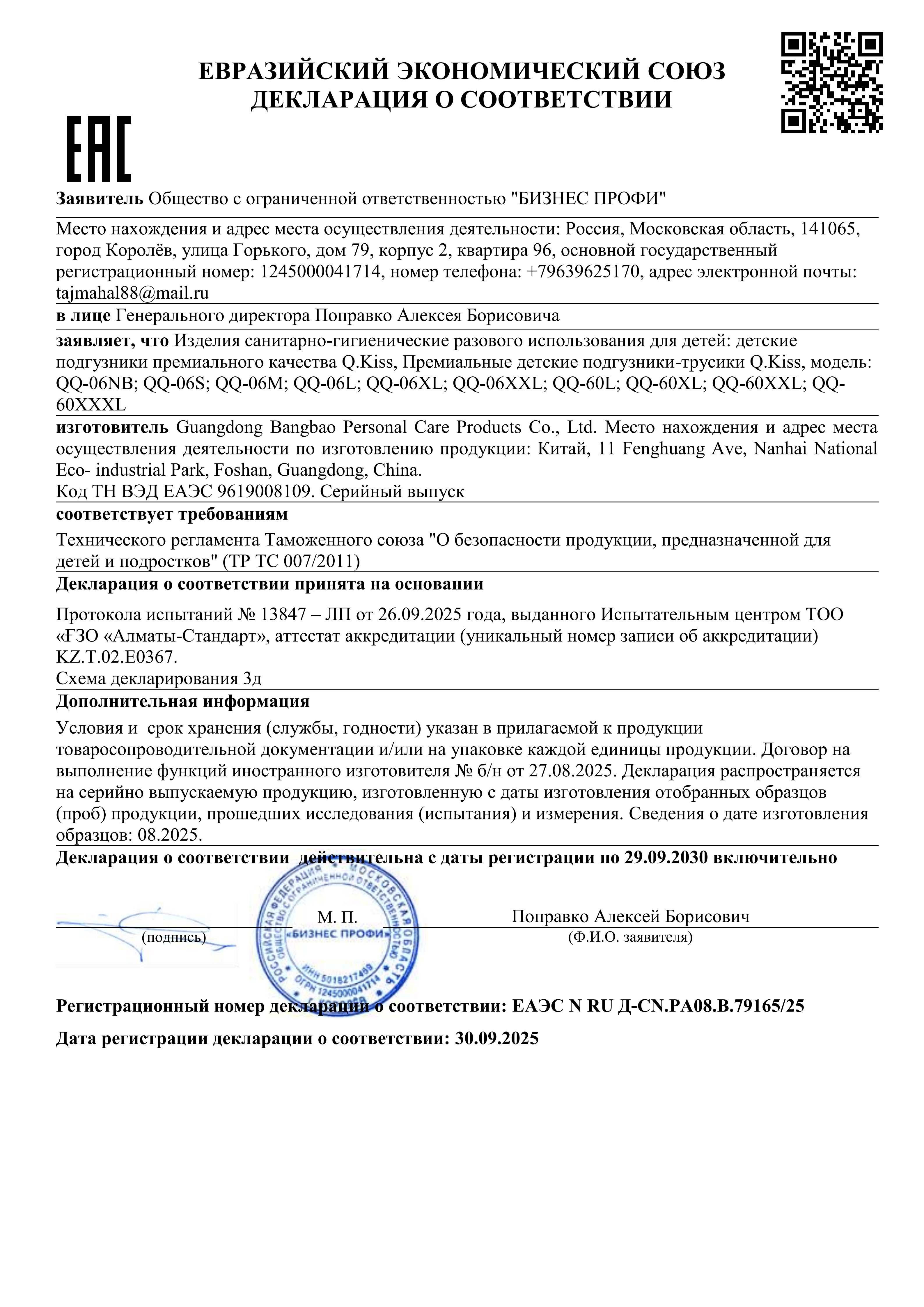
Answers to critical questions regarding compliance, customization, and factory operations.
Advanced absorbent products engineered for retail, commercial distribution, and healthcare supply chains.
 Bangbao